
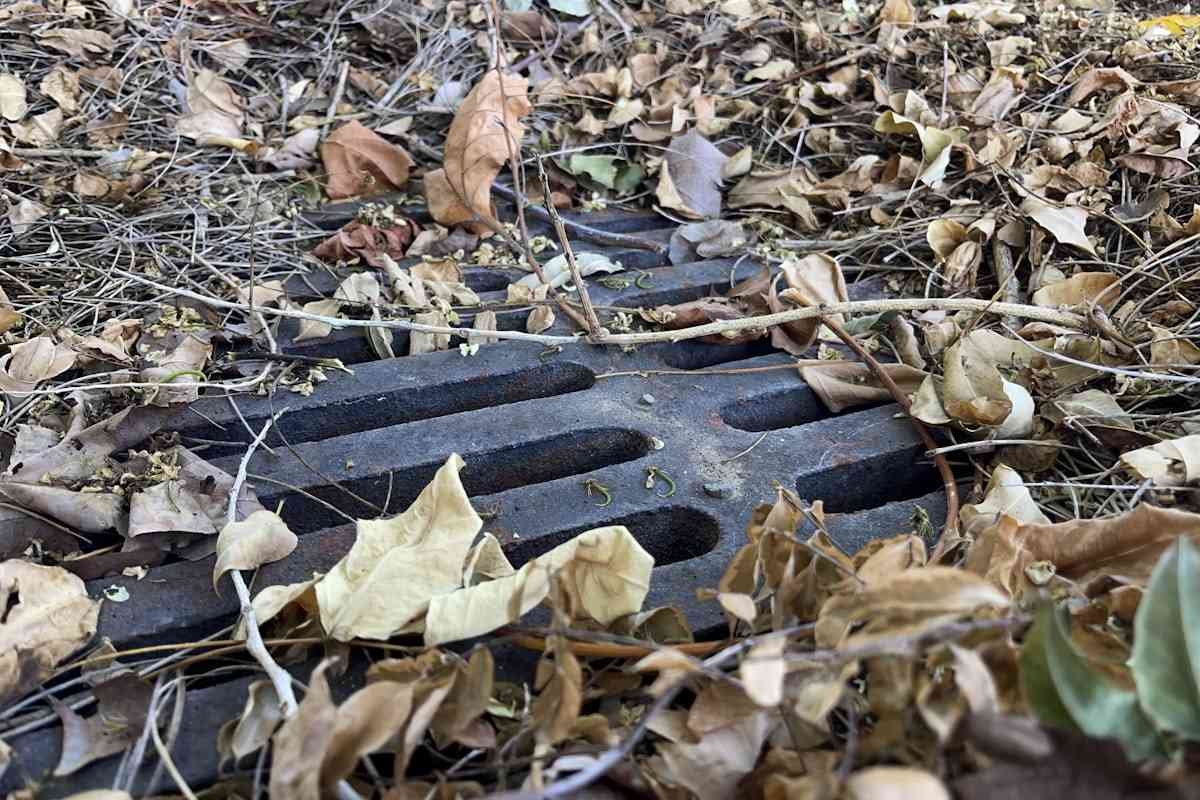

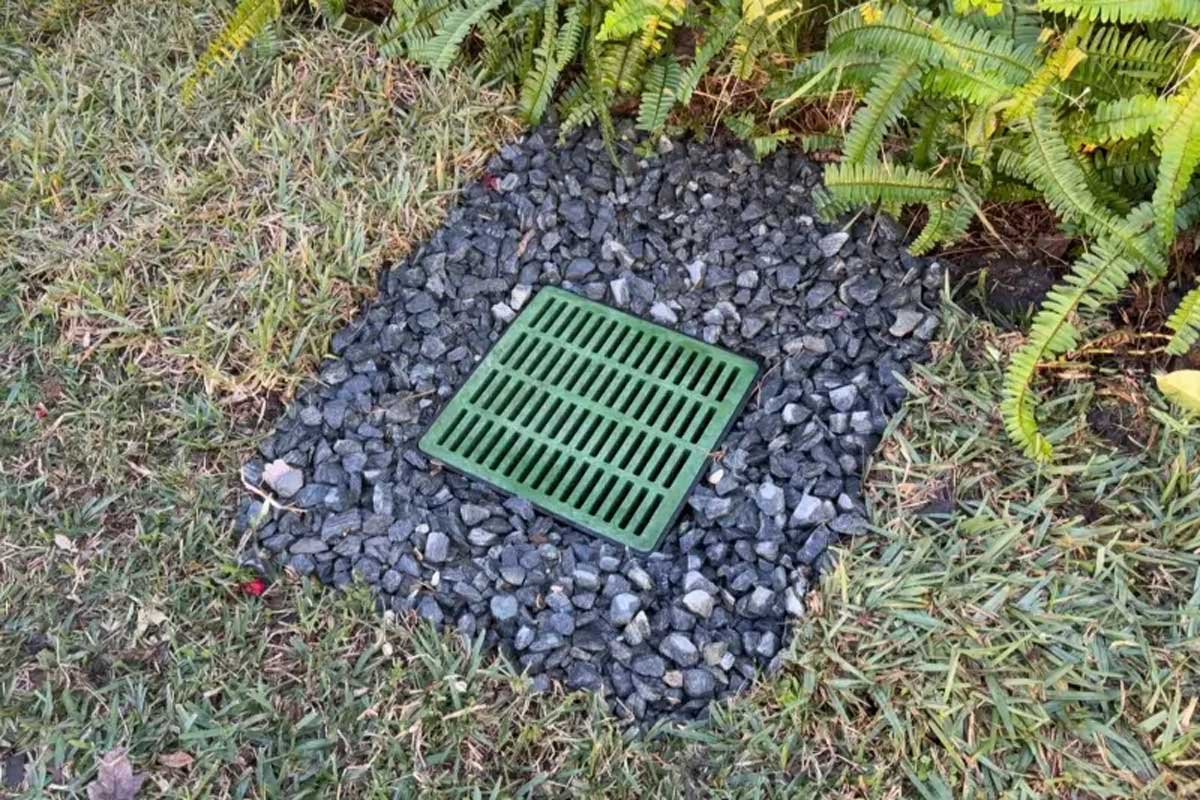
A catch basin for yard drainage is a buried box with a grate on top, set at the low spot where water pools, with a sump below its outlet pipe to trap sediment. Kits cost $40 to $250 by size, and the water leaves through a pipe sloped at 1 percent to a legal discharge point.
It is the right tool for one specific job: a visible puddle that forms in the same place every rain. Water you can point at goes to a basin; soil that stays soggy over a wide area is subsurface water, and that is french drain work. Picking between them by symptom saves buying the wrong trench.
Catch Basin, Yard Drain, or French Drain?
The names blur in store aisles, and the sorting is simple. A catch basin is a point collector: one box, one grate, standing water pours in from the surface. A yard drain is the same idea in a smaller body, often without a real sediment sump. A french drain has no opening at the surface at all; it is a gravel trench that sips water out of saturated soil along its whole length.
Two symptoms, two tools. A birdbath puddle at the patio corner or under a downspout wants a basin. A lawn that squishes for days after rain wants the trench. Properties with both symptoms combine them, and the basin’s outlet pipe can share the same discharge line.
Sizing: Match the Box to the Flow
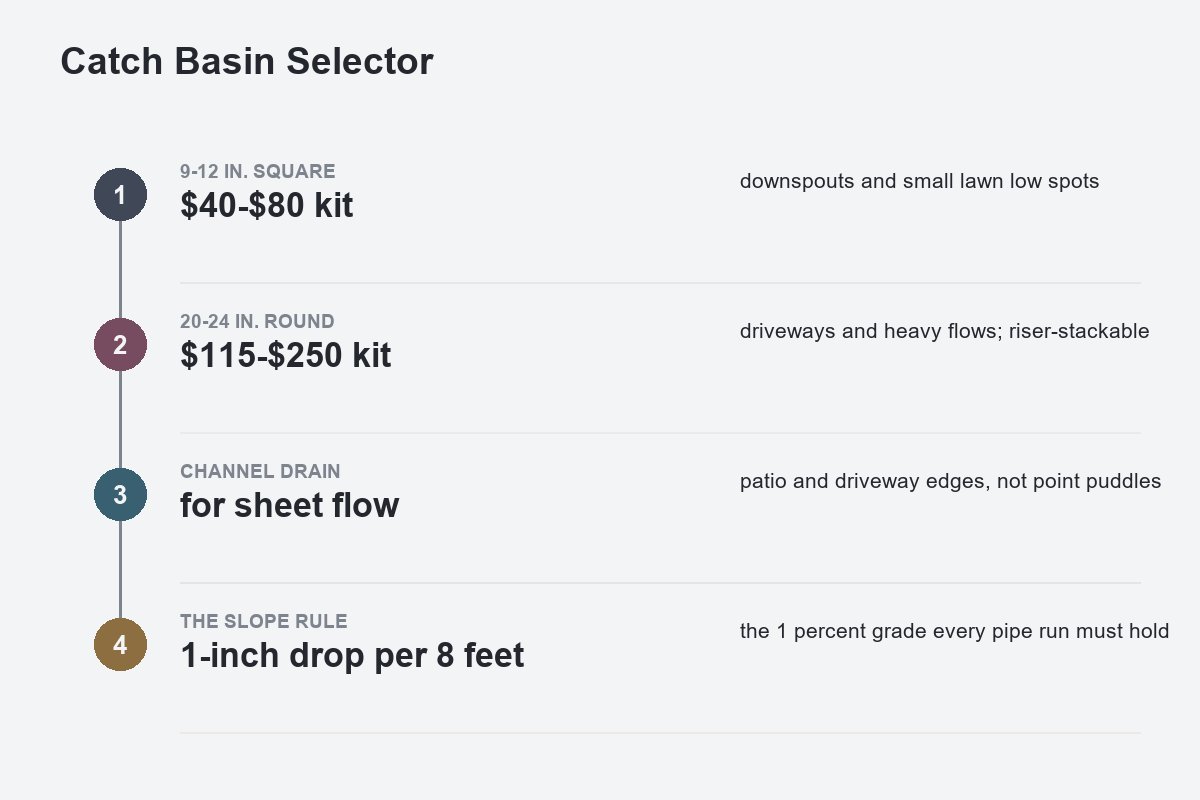
Small 9-to-12-inch square basins, $40 to $80 as kits, handle a single downspout or a modest lawn low spot. Large 20-to-24-inch round basins, $115 to $250, carry driveway and multi-source flows, hold more sediment between cleanings, and stack risers to reach grade in deeper installs; retail listings put a 12-inch kit near $49 and a 20-inch six-knockout kit at $115. For water sheeting across a patio or driveway rather than pooling at a point, a channel drain along the edge beats any box.
Grate material matters more than basin brand. Plastic grates are pedestrian-rated; a basin in a driveway needs a metal grate rated for vehicle load, a $30-to-$60 difference that prevents a cracked grate the first winter.
Installing One: The Slope Is the Project
The install order, condensed from NDS’s installation guide: set the basin at the natural low point, dig its pit 6 inches wider than the box with 2 to 4 inches of crushed-stone base, trench the outlet route with 12 to 18 inches of cover over the pipe, and hold a minimum 1 percent grade to the discharge point. One percent means about a 1-inch drop for every 8 feet of pipe; check it with a line level before backfilling, because a bellied pipe collects silt at its sag until it closes.
Solid pipe, not perforated, carries the water out. The destination options and their legality are the same as for any drainage line: daylight on a downhill slope, a dry well in sandy soil, a storm connection where the municipality allows it, or a pop-up emitter at the curb (the same endpoint buried downspout lines use). The basin is the easy half; the sloped route to somewhere legal is the half that decides whether the project works.
The Problems, and What Prevents Each One
Catch basin failures are boring and predictable. Leaves mat over the grate and the puddle returns with the basin working fine underneath; a leaf-guard grate or a fall sweep fixes it. Silt fills the sump until it reaches the outlet; scooping the sump twice a year keeps the pipe clean. Standing water in the sump breeds mosquitoes in summer; a few drainage holes drilled in the basin bottom over the gravel base lets it weep dry between rains. And a line laid without slope silts shut in its first season, which is a redig, not a cleaning.
The ground immediately around the grate is its own small design problem, and owners think about it more than any product page does:
“How should I manage the sediment around this catch basin? Should I do concrete in a cone shape towards the basin and pea gravel on the non-concrete sides (with non-woven landscape fabric below the pea gravel)? What should the process look like for doing that concrete?”
– r/landscaping, August 2026 (4 upvotes)
The principle behind any of those finishes: grade the last few feet toward the grate so water arrives, and armor that surface (concrete cone, mortared stone, or fabric-backed gravel) so the arriving water does not carry the yard in with it.
Cost: DIY Kit vs the $1,800 Quote
A DIY install lands around $150 to $400 all-in: the basin kit, solid pipe at a few dollars a foot, gravel, and a weekend of trenching. Professional installs for a basin with a 15-to-20-foot run commonly quote $1,500 to $3,000, and the spread between those numbers is labor and the contractor’s discharge planning. The quotes homeowners bring to forums sit right in that band:
“Hi, so we have water pooling up within 6 feet of our foundation. We probably need to regrade our backyard. An irrigation/drainage company quoted us 1800 to dig a trench sending water from gutter downspouts to a low spot 15-20 feet away from the house. This would also include a catch basin where water that I guess drains into basin joins downspout water to be sent 15 feet away. My questions are 1) is this a good idea And 2) they quoted us an additional 2k to make it a French drain instead of a c…”
– r/landscaping, November 2025 (3 upvotes)
That $2,000 upgrade question has a symptom-based answer: pay for the french drain only when the soil itself stays saturated. Pooling surface water beside a foundation is what the basin-and-pipe configuration exists for, and paying trench-drain money to solve a puddle is the most common oversell in residential drainage.
Catch Basin FAQ
How deep does a catch basin need to be?
Deep enough for the basin body plus 2 to 4 inches of gravel base, typically 18 to 30 inches of digging for residential units, with the grate finishing flush to grade. The outlet pipe leaving it wants 12 to 18 inches of cover along its route.
Can I build a catch basin myself?
Yes; a kit basin, solid pipe, and a line level are a weekend project for anyone willing to trench. The parts that decide success are holding the 1 percent slope on the pipe and having a legal place to send the water, both settled before the first shovel.
How often does a catch basin need cleaning?
Scoop the sump and clear the grate twice a year, spring and fall, plus a check after any storm that drops heavy leaf litter. A basin that suddenly backs up after years of working usually has a full sump or a silted low spot in its pipe, in that order.
Does a catch basin need a dry well?
Only when no gravity discharge exists (see how to size a dry well): the basin collects, but the water still needs somewhere to go. Daylight or a storm connection beats a dry well where available, and clay-soil properties should test how fast a pit drains before trusting one.